Friday, 1 April 2011

Book Review 3: The Scales of Injustice by Gary Russell (1996) - 10/10

Story Summary (BIG SPOILERS!):

The existence of another awakened Silurian shelter is revealed, as in Sussex, England, a teenage boy is kidnapped, and a frightened policewoman starts drawing cave paintings. While investigating, The Doctor himself is taken, and encounters this new group, made of different Silurian races, and even Silurian-Sea Devil hybrids.
Meanwhile, C19, the British government alien defence department in liaison with UNIT, through its secret medical facility – the Glasshouse is also trying to find the truth about the Silurians. However, unbeknownst to them, a secret organisation that hides in C19, called the Vault, is searching for the Silurians to include in their inhumane genetic experiments. The Vault’s aim is to advance the military might and power of Britain over the rest of the World, through the discovery and use of alien secrets and technologies.
Back at UNIT, the Brigadier tries to prevent the breakdown in his marriage, and Liz Shaw is manipulated by the Vault into locating the Silurians. Liz finds The Doctor, once again trying to plead the case for peace between the Earth Reptiles and Human kind, without much success. An insane, powerful and influential Silurian deputy galvanises a large number of the Earth Reptiles to once more attack the Humans. Sergeant Benton and the UNIT forces manage to defeat this Silurian offensive, while Liz manages to reason and convince the remaining Silurian-hybrids to work and live with the Humans in peace.
In Northumberland, Sergeant (soon-to-be Captain) Yates, with later help from The Doctor and the Brigadier, infiltrates and thwarts the Vault organisation, while its mysterious leader escapes to fight another day. After the incident is over, Liz Shaw decides to leave UNIT and go back to Cambridge to try and forge a better career and life for herself, away from the Doctor.

Story Placement
Between The Blue Tooth (BIG Finish Audio) and The Devil Goblins from Neptune (BBC Book PDA).
(TV Episodes: Between Inferno and Terror of the Autons)

Favourite Lines
The Doctor – “If you want a war with mankind, you will certainly get one. And you will receive your wish. You will surely die”.
‘Inside a barred cage was the lower half of a cream-coloured Dalek, stained with green and pitted with bullet holes. The Doctor was sure he’d never seen a Dalek like that, least of all in the twentieth century’.
The Doctor – “I realised not that long ago now that I didn’t know very much about you, Liz. As you say, it’s been all work and no play. That’s my fault. And if you’re going back to Cambridge, then the opportunities to mend that breach are going to be few and far between. But for what it is worth, I value you. Your judgements, your ideas and your ethics. You’ve been my calm in a storm. My white when I’ve been black. I don’t think either of us realised how much I’ve relied on you over the last eight months”.

Review:
It was only going to be a matter of time before I chose a book featuring my favourite Doctor, and I was already aware that The Scales of Injustice had gathered an acclaimed reputation amongst the Doctor Who book reading community; a reputation which I discovered to be very well-founded. A Doctor Who fan could be forgiven for thinking that this adventure is merely another rehash of The Silurians, (the original Silurian story made for Season 7 in 1970) just to plug in a few continuity gaps in the TV episodes. After all, the other TV appearances of these popular Earth Reptiles had been, so surely we will get more of the same, right? No. Nothing could be further from the truth.
Sure, it does fill in some big continuity blanks created by companion Liz Shaw’s sudden departure off-screen between Inferno and Terror of the Autons, and the odd continuity established in the 1984 sequel adventure Warriors of the Deep; and the events surrounding the Silurians in this story echo that of the others, but they are all written, plotted and presented in a much different, and in fact, far better developed way.
For instance, The Scales of Injustice substantially builds upon the established world of the Earth Reptiles in The Silurians, and creates a fascinating and fully-fledged society, truly worthy of them. Here we have not just a shelter, but what feels like in many ways to be an underground city where a whole community resides. Gary Russell also takes the time to give every Silurian an individual name, including the previous Earth Reptiles who featured in The Silurians, personalising them, and giving their characters depth and independence. Although this may seem a bare necessity, it is a sad truth that Doctor Who aliens weren’t always given the same level of depth on Television as their human counterparts. The simple and relatively unfeeling nature of monsters like the Daleks and Cybermen allows writers the luxury of not needing to necessarily write characters for them. The Silurians were a happy exception, but even they were still reduced to unnamed monikers like ‘Leader’ and ‘Scientist’. Now the Earth Reptiles can at last be seen as individuals, but more importantly it makes us more able to sympathise with their plight.
Throughout the book, Gary Russell helps us to see not just the superficial details to the Earth Reptiles, but also their complexity and heart, showing us for once an alien race that cannot be defined in black and white. We see their compassion as well as their hate, such as the wise and open-minded Chukk, who always takes The Doctor at his word. More interesting though is our encounter with young scientist Baal, who is experimenting both to save his own life, and that of the other Silurian-Sea Devil hybrids, who are all dying from premature cellular ageing. It is in fact through Baal that we realise (if you didn’t realise already) that the Silurians are just as much of an emotionally and mentally complex race as Humans, which of course is ultimately the point. In his desperate search for a cure, Baal’s initial prejudice and amoral values cause him to rely on inhumane experimentation upon his human captive, Marc Marshall. In the company and help of the Doctor and Liz Shaw however, Baal slowly sees the error of his ways, and that of some of his people.
Although the Silurians’ are still suspicious and afraid of the humans, in part due to the beliefs of the influential and insane deputy leader – Auggi, the Earth Reptiles finally see the best in the ‘Apes’ they previously despised due to the selfless and positive acts of both The Doctor and Liz, and finally reach a peace. How long this peace actually lasts remains to be seen, but in the long term it seems it must fail considering that in Earth’s future, the Triad (Icthar, Scibus and Tarpok, three old Silurians, who feature in this book also) try to attempt to finish off Mankind for good in Warriors of the Deep.
However, from the very first page, it’s very clear that there’s a lot more going on. Gary Russell cleverly weaves several subplots into the story, the most important being that of the Vault. In an era that was influenced by the legendary James Bond film series, what better than to feature a Bond-esque conspiracy into the proceedings. Throughout the classic TV episodes of Doctor Who, it was effectively UNIT that was at the heart of these many conspiracies, because it was their world-saving antics that were being hushed-up by the government. However, Gary Russell blows this assumption out-of-the-water by giving us a secret organisation forged within C19 (without their real knowledge) to help benefit British interests and Empire, through the use and manipulation of alien secrets and technology. In effect, this is Torchwood, thought up ten years earlier (1996), by another name. In fact, it’s an idea so good; I’m not surprised it’s been used more than once. In the context of The Scales of Injustice though, I feel the idea works even better here than in its later TV incarnation. The Vault is the black to UNIT’s burning and bold white, and the two contrast each other brilliantly throughout the book.
The mystery of the Vault is well revealed in the book too, with only visual clues at first, and only a full reveal at the climax, when The Doctor discovers the truth for himself. It helps to create an exciting rise in tension during the book’s second half, and cleverly switches to become the central plot at the final quarter, while the Silurians are gradually pushed more into the background.
The Vault is also a homage of, and has taken clear influences from The X-Files too, like the main villain of the piece – the scarred pale thin man, who mirrors the silently menacing ‘cigarette-smoking man’ from that show. Partially Cyber-converted like Tobias Vaughn, the pale man is a genuinely menacing (and appropriately Bond-like) villain, who is seen to inflict quite graphic harm to show off his inhuman strength. There are also a lot interestingly unresolved elements to this plot too. The pale man, interestingly escapes to fight another day (like Blofeld perhaps), as do his half-human, half-auton associates, but he also has a mysterious boss, who we get no clues for. Is this the Master? Or is there another big villain we will meet someday? I’m aware that there are two sequels to the Vault plot (already written) – Business Unusual and Instruments of Darkness, and I will look forward to reading these with great interest.
Of course a Doctor Who UNIT adventure wouldn’t be the same without either a raid or an alien assault and in The Scales of Injustice we get both. First, Benton and UNIT troops withstand a Silurian attack, including the first chronological appearance of the Myrka (in Doctor Who continuity). As a big fan of the Jon Pertwee years, it felt like nostalgia made flesh. I could just imagine the HAVOC stunt team in action, jumping about the Sussex coastline, throwing grenades, and reeling from killer explosions and heat rays. So it was almost a double ‘whammy’ when the good ol’ Brigadier and crew came rushing like the Cavalry to the Doctor’s rescue; launching an assault on the Vault.
However, what makes The Scales of Injustice stand out from many of its Doctor Who novel contemporaries is the substantial character developments of not just its antagonists, but more importantly, that of its famous and much loved regulars.
For the first time that I can recall, we get a detailed insight into the private life of the dedicated and ever affable Brigadier Alistair Lethbridge-Stewart. We see that while the Brigadier has a tough time trying to do his duty to the world, he also has an even more terrible time, trying to reconcile and achieve some kind of peace and normality in his home life. The BBC TV series Spooks has often well-explored and lamented, how secret service personnel could lose out on the luxury and type of life we often take for granted. In this case, the Brigadier is also facing a similar prospect, as his wife Fiona hates him for always been away at work, never trusting her with secrets, or spending enough time together as a family. Of course the Brigadier is duty bound by the official secrets act to stay silent of his work, and the national importance of it requires his constant attention. However, that doesn’t make it any less sad when Fiona inevitably leaves him, taking Kate, their only daughter with her. What’s so great about Russell’s writing here is that it shows us the real life and rounded three-dimensional person of a character that is very easily taken for granted, even by The Doctor himself. The sheer heart and strength of character here, also re-confirm that the Brigadier still is, and always has been, one of the greatest Doctor Who companions ever, and my personal favourite too in fact.
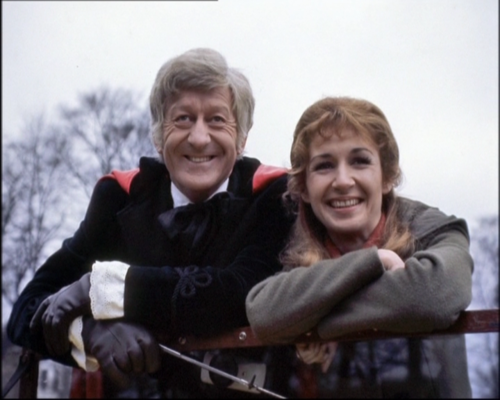
The story of The Scales of Injustice though, is ultimately that of Liz Shaw’s. The companion’s sudden departure between Inferno and Terror of the Autons needed and demanded a proper explanation; one which was both believable and true to the original character and in this Gary Russell succeeds admirably. From the very beginning of the story we realise that Liz feels underused and undervalued, fed up of not achieving anything worthwhile for herself since being enlisted by UNIT. To make matters worse, Liz is constantly patronised from all sides, and feels alienated by the Doctor, who becomes increasingly more obsessed with his TARDIS repairs by the day. Ill-treated and unrecognised, it is unsurprising that Liz decides to rebel by hunting down the C19 conspiracy alone, or feels a need to leave, a need to have a life for herself for once.
Liz’s feelings reach a climax in the book’s final chapter, which culminates in a powerful final scene, as Liz and the Doctor have a very moving goodbye. Here the Doctor displays his alien detachment, but also for the first time tells Liz of his affection and admiration for her, apologising for his earlier behaviour, and wishing her well in the future. Liz’s departure as a character is one of the most powerful, dignified and rewarding I’ve seen of any Doctor Who companion, and it was about time that the character finally achieved the proper send-off she deserved.
Although Gary Russell has filled The Scales of Injustice full of Doctor Who continuity references, ranging from The War Machines, all the way to Remembrance of the Daleks; compared to the common school of thought, I see their inclusion as being a good, rather than a bad thing. It is true that some Doctor Who writers use old continuity as a self-indulgent means just to show off how much they know, but in The Scales of Injustice, Gary Russell has used all this continuity to create brilliant story moments, adding dimensions to both the narrative and the characters especially, creating a very well-rounded and satisfying experience for the reader. In fact, the only criticism I could make about this book is that Gary Russell’s dialogue can occasionally be rather simplistic and clunky. However, because the story and characters are written with such heart and spirit, and the dialogue true to character, that it’s not something you remember for long. Younger readers may also find the first chapters quite slow-paced to start with, but that is only because of how many plots and character arcs Gary Russell has to set up at the start of the story. As for myself, I became so engrossed into the book, that for the last 100-odd pages, I couldn’t put it down.
The Scales of Injustice has definitely been one of my very best reading experiences so far, and part of that is certainly down to the care and attention Gary Russell has taken with this book and the characters he pays tribute to. However what ultimately won me over was how well judged the story and tone was considering the period it was intended to fit in. I could easily imagine The Scales of Injustice being another fantastic classic from Season 7 in 1970.  In fact, to me it feels like having just watched an episode from your favourite period of Doctor Who for the very first time, like re-living the favourite years of your childhood. It feels like nostalgia made real.

Score: 10/10

Thursday, 3 March 2011

Audio Review 3: The Fragile Yellow Arc of Fragrance, written by Moris Farhi (2010) - 5/10

Released: November 2010


Cast:

Susan Foreman – Carole Ann Ford
Ian Chesterton – William Russell
Melody/Harmony – Helen Goldwyn
Rhythm – John Dorney

Story Narration and other characters voiced by William Russell and Carole Ann Ford


Main Production Credits

Producer and Script Editor – David Richardson
Writer – Moris Farhi (adapted by Nigel Robinson)
Director – John Ainsworth
Incidental Music,
Sound Design and Recording – Toby Hrycek-Robinson at Moat Studios
Title Music – Ron Grainer, Delia Derbyshire and the BBC Radiophonic Workshop
TARDIS Sounds – Brian Hodgson and the BBC Radiophonic Workshop
Executive Producers – Nicholas Briggs and Jason Haigh-Ellery


Story Summary (SPOILERS!):
The TARDIS team have been relaxing on the planet Fragrance, where a utopian civilisation resides. However, upon leaving, Rhythm, an adult male from the planet, confesses his love to Barbara. After turning him down so she can return home, Barbara discovers to her horror that adults on Fragrance are only allowed to love once, and if that love is broken, then they have to die. Before Barbara can act, the Doctor makes up the decision for her by setting the TARDIS in motion. Barbara grieves while her recent friend Rhythm sacrifices himself to the Sapphire Sun.


Story Placement

Between Farewell, Great Macedon (BIG Finish Audio) and The Witch Hunters (BBC Book).

Review:
After the magnificent historical epic of Farewell, Great Macedon, this adventure seems to be something of an anti-climax. Nothing is at fault with the audio itself, boasting the same polished and stylish production as the previous story in the First Doctor Boxset, and the cast excel once more with grand performances all round. William Russell continues to delight with his superlative William Hartnell impression, and even the narration feels a lot better presented too.

However, there’s no getting round the fact that The Fragile Yellow Arc of Fragrance is a short experimental one-off, a demonstration of Moris Farhi’s clear writing talents, and was never really intended for production. I’m not saying that BIG Finish shouldn’t have tried to produce it, in fact the whole production is a fascinating listen, and gives a great insight into the way outside writers thought about Doctor Who and its imaginative possibilities in those early years. However, because of its intended means as a single test script to pitch Moris Farhi’s suitability for Doctor Who, The Fragile Yellow Arc of Fragrance is as a result, among the most basic of Doctor Who stories, and lacks the level of depth possible in most other stories (regardless of format).

There’s still a lot to enjoy though. I was very impressed by how well Moris Farhi understood how to write for the regulars so early on (this was written before Farewell, Great Macedon), their words sounding as truthful to their TV counterparts as conceivably possible. The prose description, written into the narration, is also gorgeously
poetic, particularly the powerful tragic description of how Rhythm died as he floated up towards the Sun, which evoked memories of reading about the Greek myth of Icarus at school (so long ago now). I suspect we have Nigel Robinson and Dave Richardson to thank for these great moments, privileging the audience with imaginative images that wouldn’t have even been conceived in the original script.


Sadly though, there is one element that undermines the story – its major plot point. Despite seeming to be the ultimate civilisation, I find it hard to believe that a society which has eliminated crime, tyranny and fear from the planet, does not allow adults to have the freedom to choose who, or rather who not to love without fatal consequences. It’s an interesting idea, I grant you, but it doesn’t really stand up to scrutiny, and in fact only serves as an arbitrary gimmick to give the story its function. In an advanced society like Fragrance’s I would’ve expected it to understand and accept the idea of rejection in relationships.

It’s hard to determine exactly what Moris Farhi is trying to say by writing this. He could be preaching the need for society to uphold the sacred vow of love and marriage, or maybe even representing the pain of bad
rejections metaphorically (dying inside). Or on the other hand, perhaps Farhi could really be saying that you can’t create a perfect (utopian) society without destroying individual freedoms (or even individuality itself). All are interesting ideas, but they’re not really developed well enough to give proper meaning to its audience, such is the nature of a basic short story.
The Fragile Yellow Arc of Fragrance is a nice little experiment that is very interesting to follow. With expert production values courtesy of BIG Finish, the adventure shines both in performance and prose. However,
because of the seemingly stupid and contrived culture for people in broken relationships to commit suicide and sacrifice themselves, it’s hard to see the point of what takes place in the story, and that’s ultimately what heavily
undermines its good work in the end.


Score: 5/10

Thursday, 20 January 2011

TV Review 1: An Unearthly Child, written by Anthony Coburn (1963) – 10/10

Broadcast: 23rd November – 14th December 1963

Cast:
The Doctor – William Hartnell
Susan Foreman – Carole Ann Ford
Ian Chesterton – William Russell
Barbara Wright – Jacqueline Hill
Za – Derek Newark
Hur – Alethea Charlton
Old Mother – Eileen Way
Kal – Jeremy Young
Horg – Howard Lang


Main Production Credits

Producer – Verity Lambert
Story Editor – David Whitaker
Writer – Anthony Coburn
Director – Waris Hussein
Designer – Peter Brachacki (Episode 1 only) and Barry Newbery
Costumes – Maureen Heneghan
Incidental Music – Norman Kay
Title Music – Ron Grainer, Delia Derbyshire and the BBC Radiophonic Workshop
Special Sound – Brian Hodgson and the BBC Radiophonic Workshop

Story Summary (SPOILERS!):
Ian Chesterton and Barbara Wright, two school teachers from Coal Hill School, are perplexed by a mysterious student of theirs – Susan Foreman. One night, to satisfy their curiosity, the two teachers follow Susan to her home address, and find only an abandoned Police Telephone Box in an old junkyard. However, the Police Box is more than it appears. Upon forcing themselves inside, Ian and Barbara discover that the Police Box is in reality a Space and Time Travel Machine that is incredibly bigger on the inside than out. Within the machine are Susan, and her equally mysterious grandfather, who only refers to himself as ‘The Doctor’. The old man though, refuses to let Ian and Barbara go, now that they have discovered the Space/Time Ship, called a ‘TARDIS’, and instead sets the craft in motion. Once the Ship stops, they all find themselves back in time to just after the Ice Age, where a tribe of Prehistoric Man is trying to re-discover the secret of fire. The four Time Travellers are forced to stick together in order to survive, and eventually escape this barbaric period of Human History.

Story Placement
Between Time and Relative (Telos Novella) and The Daleks (TV Episode)

Favourite Lines
Barbara Wright – ‘Silly isn’t it. I feel frightened...as if we’re about to interfere in something that is best left alone.’
The Doctor – ‘The point is not whether you understand...what is going to happen to you?’
Barbara Wright – ‘But you are one of us! You look like us, you sound like us...’
Susan – ‘I was born in another time, another world.’

The Doctor – ‘If you could touch the alien sand and hear the cries of strange birds, and watch them wheel in another sky, would that satisfy you?’

The Doctor – ‘Fear makes companions of all of us, Miss Wright.’

Review:
The beginning of all beginnings. In fact, I’d even argue that An Unearthly Child is the best beginning of any TV show, ever. Forget Spearhead From Space, Rose, or The Eleventh Hour, the first episode of An Unearthly Child is the best introduction that Doctor Who could ever have. The genius of that first episode is of course the fact that the story is told through the lives and actions of The Doctor’s future companions rather than those of The Doctor himself, a setup which has been copied and used as a template for many Doctor Who stories over the decades that followed. This approach not only effectively conveys the more human aspects of the situation, but also makes the story much more fascinating and interesting to watch, as the audience are removed from any preconceptions about the story (and the programme), which creates a genuine sense of mystery and foreboding that grips the viewer throughout.
The mystery is also upheld through the masterful characterisations of the Doctor and Susan, who both betray an aloof, but cold detachment from their surroundings – a clever way of hinting at their true alien natures. Susan in particular is quite nervous, perhaps as a result of being less experienced to Time Travel than the Doctor, but is rather dreamy too, which also adds to her mystery, and makes the story more compelling. The Doctor is equally, if not more compelling in his first appearance. He comes across as a sharp-witted, whimsical and very elusive character, while clearly being highly intelligent, only explains and reveals what he has to. His secretive and slightly mercurial nature created a layer of mystery around the character that we only really began to understand at the climax of The War Games, six years later.
It’s worth noting at this point that the interpretations of these characters were originally much darker and harsher in the Pilot episode (which was an earlier trial production of the first episode of An Unearthly Child). Here, the two alien time travellers were much colder, but also had much more great lyrical dialogue that was immensely quotable like:
The Doctor – ‘We are not of this race. We are not of this Earth. We are wanderers in the fourth dimensions of space and time...’
The Doctor – ‘Think what would have happened to the ancient Romans, if they’d possessed the power of        gunpowder; if Napoleon had been given the secret of the aeroplane? No my child, we both know that we cannot let our secret loose into the world of the twentieth century!
Susan – ‘But you can’t keep them prisoners here!
Ian – ‘You can’t keep us prisoners anywhere’.
The Doctor – ‘I cannot let you go school teacher. Whether you believe what you have been told is of no importance! You and your companion would be footprints in a time where you were not supposed to have walked’.


However, it’s easy to see why these versions of the characters were softened up in the reshoot of the first episode. These would be the regulars that the audience and even children would have to relate to week after week. Despite how much great drama there is to watch and hear in the pilot episode as a result of the more darkly defined Doctor and Susan, to insure Doctor Who’s appeal, it was just as much a good thing to make them warmer and more likeable.
The other two central characters, Ian and Barbara are very strong too. Ian is a very charming and dynamic gentleman who was intended to be the hero of the programme in its early stages, but thankfully becomes so much more due to his down-to-earth nature. Barbara on the other hand is a conscientious and caring woman that has been slightly hardened by her life experiences, and yet is also very independent and open-minded. The framing of their characters as school teachers also gives them a welcome air of authority, which comes in handy very quickly when they have to confront the difficult Doctor. Both of them are two of Doctor Who’s most believable characters ever, and also two of the strongest companions in the show’s entire history.
Back to the story though, the introduction of the TARDIS ten minutes before the end of the first episode is a supreme game-changing moment for the story, let alone the series itself. Although we seasoned Doctor Who viewers often take the TARDIS for granted as a mere plot device these days, the dramatic impact made by its first arrival into the programme cannot be overestimated. This defining television moment exploded the scale of the story from an intriguing, gripping and personal mystery to an adventure into Time and Space that could literally go anywhere. It was a moment that was truly magical, and yet feels far more fascinating and substantial than the magic doors of Alice in Wonderland and The Lion, the Witch and the Wardrobe that have clearly inspired part of it, perhaps due to the glorious technological machinery that the TARDIS appears to show us. Other viewers may see the original TARDIS interior as cheap and cumbersome, but I don’t. It still looks as amazing to me as an adult, as it did when I was a child.
We then move into the iconic first take-off sequence that is very cleverly done through the eyes of the TARDIS as London disappears into the mystical waves and shapes of what would much later be termed as the Time Vortex, created in the same manner as parts of the programme’s original title sequence. At this point I feel I should also praise the work of both Bernard Lodge and the Radiophonic Workshop.

With the help of Norman Taylor (BBC Technical Operations Manager who originally created the effect) and Hugh Sheppard (Camera Operator), Bernard Lodge discovered a new form of visual video effect, created from inducing video feedback when an operating camera is pointed at the monitor screen through which the camera’s signal is broadcast back to the production team (these days a director). The effect occurred when a stray light hit the monitor screen, and sent the video feedback into ‘swirling’ images of black and white (quoted from Norman Taylor). The famous titles were created when the feedback was induced deliberately and mixed with the standard white caption of ‘Doctor Who’ into the camera as a further experiment. The result is to be frank, amazing. In fact I would say this is probably Doctor Who’s best ever title sequence ever. No I’m not just saying that for sake of this review, I really do think it’s the best. Sure it may not be in colour, and the quality of the raw titles footage may have deteriorated a bit over the many decades, but the patterns created look so natural, that they can’t help but be immensely captivating and fascinating to watch. The flow of the white shapes and lines are so unusual, but seem so real, like the movement and flicker of fire flames that you really can imagine that the Space/Time Vortex is unfolding past you. Furthermore, because of how natural and real it looks, it will always be better than any amount of expensive CGI because it appears alive and uncontrollable like nature itself unlike the calculated and moderated images from a computer. In short the discovery of this new technique, later termed as the ‘howlaround’ effect, is nothing short of genius – which is also why it is so enthralling to see an extended version on the TARDIS take-off sequence.
The sound of the TARDIS itself was also pure genius too. Created by Brian Hodgson as part of the now legendary BBC Radiophonic Workshop, it really does feel like the sound of the Universe, as you hear the audible ‘tearing of the fabric of reality’, as Hodgson so eloquently put it himself, and is every bit as iconic now as the image of the the old 1960’s blue Police Box that represents the exterior of the TARDIS. An even greater legend came out of the Radiophonic Workshop however – Delia Derbyshire. Just as John Barry did with Monty Norman’s James Bond theme, Delia took the basic original composition from Ron Grainer and expanded upon it, determining what would become the definitive sound of what Doctor Who music should be like. Of course, the majority of her musical input into Doctor Who rarely ventured beyond its title theme, but what a title theme it is! Delia Derbyshire took one written composition, arranged and realised it electronically to create a visionary masterpiece of electronic music, and the best TV theme of all time! Such is the sheer quality and cultural impact of the music she created, that her original 1963 arrangement of the theme stands as a major and key piece in the entire history of electronic music that in my mind at least, is unsurpassed. The legacy of Delia Derbyshire’s work (as well as the Doctor Who theme) stands as a beacon of achievement to all students and lovers of music everywhere.
Back to An Unearthly Child, the first episode ends on another iconic image, as the TARDIS’ Police Box exterior stands alone in a barren desert, in the large shadow of a bemused caveman...
Unfortunately, here’s where the critical consensus ends. Almost everyone agrees to the brilliance of Doctor Who’s opening episode. As to the remaining three episodes of An Unearthly Child though, the perceived critical opinion is that they are of little to no consequence. A failed early experiment into the ‘historical’ format of Doctor Who stories, and is best ignored in favour of The Daleks. However, as you can probably tell by my rating of the story, I greatly disagree with the critical reading of those episodes. It is true that there are small periods of padding in the script, particularly in episodes 3 and 4, as the Time Travellers escape, get recaptured, and then escape again. However, if you look in detail at the journeys of the four lead characters throughout episodes 2 to 4, you’ll see that the real story behind An Unearthly Child, aside from the first episode introduction, is not about how a tribe of Cavemen regain the secret of Fire, but in fact how our 4 new lead characters react to this hostile world, which although our own, is just as alien a world as Skaro would be in The Daleks, a couple of episodes later. The story is also about how the four Time Travellers go from being strangers, unwillingly thrown together into an impossible situation, to eventually come together to survive, beginning a big character story arc, concluding in The Edge of Destruction, as the four leads gradually turn into the heroes we know and love.
So in short An Unearthly Child is an experiment, but it’s an experiment into what makes our characters tick. For instance, Susan becomes tense and occasionally hysterically at being faced with their difficult situation, but quickly moves into action when called for. Meanwhile Barbara’s strong composure falls away to uncertainty and feelings of helplessness, but holds onto her moral instincts for strength, as signified by her support of Za, after being badly wounded by a Tiger. Ian, on the other hand, like any other sure-minded scientist, finds himself in denial, but doesn’t take long to accept humble pie; becoming the better man and supportive friend that Barbara needs him to be. The Doctor though is the one going through the most fascinating character development.
After his smug little victory over Ian, he is frustrated by the breakdowns of the TARDIS’ instrumentation. During the Caveman encounter he cleverly manoeuvres himself in order to stay alive, but unlike the now wiser Ian, actually remains in denial when he is at fault. At this stage the Doctor is still very much of an anti-hero, and quite a cold character in the manner of his thinking. This is represented best when the Doctor is caught by Ian with the Caveman’s rock knife, in a great moment, when it’s subtly suggested that the Doctor was about to ruthlessly murder Za so the Time Travellers could make good on their first escape. Some commentators have oddly railed against this scene, claiming that the Doctor is acting out of character, but because this occurs a good number of episodes before the resolution of the Doctor’s character arc (and change in character) from anti-hero to hero in the last part of The Edge of Destruction, I would suggest that actually this is completely in character. Perhaps some of those commentators were purely thinking in terms of the way we know the character of the Doctor to be during the majority of the programme and failed to notice this point.
So as our Time Travellers unknowingly leave for their famous visit to Skaro, I ask you to look back and notice An Unearthly Child’s true worth. It was an experimental first leap for a programme that had yet to find its feet, but my goodness what a giant leap it is. An Unearthly Child is a truly groundbreaking story, not just because it started Doctor Who off to a resounding success (even if not all the viewers realised it at the time), but also because it is a groundbreaking piece of television too. It set the template for many good drama pilots to come and many more besides. However, even its success would be partially swept away in memory by some of the many great adventures that were to come...

Score: 10/10

Friday, 24 December 2010

Audio Review 2: Farewell Great Macedon, by Moris Farhi (2010) – 8/10

Released: November 2010

Main Production Credits

Producer and Script Editor - David Richardson


Story Summary (SPOILERS!):

The TARDIS arrives in the city of Babylon, amongst the famous Hanging Gardens, in the year 323 BC. The Doctor, Ian, Barbara and Susan are soon welcomed as visitors to the camp of the legendary Alexander the Great, who is also visiting the great city. Over time, the time travellers befriend the Macedonian King and his loyal generals, revelling in each other’s company. However, the rest and enjoyment is short-lived, as Alexander’s loyal friends are mysteriously murdered one-by-one. A plot is afoot to bring down Alexander the Great, but Barbara realises that this History has already been written, and there is nothing that they can do to change it.

Story Placement
Between The Reign of Terror and The Witch Hunters

Review:
The Lost Stories have been a fascinating side project for Big Finish’s Doctor Who audios. Each successive series of lost stories seems to be even more ambitious than the last. First, they started with the abandoned Season 23 for Colin Baker’s 6th Doctor, which itself was a gamble because many Doctor Who fans (not me I hasten to add) seem to have a supreme dislike of Season 22, the 6th Doctor’s first season on Television. Despite this challenge though, I feel Big Finish succeeded admirably, so it was interesting to see them raise their heights even further with the second series, by recreating a few stories dropped in the 1960’s, and by recreating the original Season 27 if the TV Show had not been cancelled in 1989. The big feat with the 1960’s stories however, is that most would have to be produced similarly to one of Big Finish’s other successful Doctor Who ranges – the Companion Chronicles, because of the obvious absence of some of the original cast, particularly the long since departed William Hartnell and Patrick Troughton.
The First Doctor Boxset is the first couple of audio Lost Stories in this series, and although I have yet to listen to the aforementioned Companion Chronicles range, if they are all as well produced as these ‘Lost Stories’, then they will be a joy to visit in future. The aural atmosphere and background are delivered with Big Finish’s typical aplomb, and immediately transport you into the stories with ease. The regular and supporting characters are all well portrayed by William Russell and Carole Ann Ford, who clearly have fun acting out all the different characterisations, both the unfamiliar as well the characters they know and love. William Russell gives a cracking impersonation of William Hartnell in particular, and if you just close your eyes, sometimes you can almost imagine its Hartnell talking. Although the narration, particularly in Farewell, Great Macedon is slightly marred by the fact that it couldn’t decide what tense it should be in, moving from past to present tenses on numerous occasions.
For the purposes of story and plot review though, I have decided to examine the two stories separately.
Farewell, Great Macedon was one of the few rejected Doctor Who stories that nearly made it onto the small screen. Written by Moris Farhi for David Whitaker, it was only rejected because of outside criticism of featuring key historical characters in Doctor Who after the transmission of Marco Polo. Teachers had complained about Doctor Who distorting children’s views of real historical events, and for the time that Farhi was pitching his script for production, the BBC were reluctant to commit to any creative risk. Moris Farhi decided to abandon the idea altogether after he was asked to dramatically change the emphasis of his scripts by the BBC, and Doctor Who lost another potential classic. Thanks to both Farhi and Big Finish we can now at last experience Farewell, Great Macedon as a production.
Farewell, Great Macedon is a highly enjoyable, but simple adventure, where in the style of many an early Doctor Who historical, the 1st Doctor and his companions come across the legendary Greek leader, Alexander the Great, amongst the equally legendary backdrop of the city of Babylon. In fact the travellers arrive in the fabled Hanging Gardens, no less. The story that pans out seems to be an expertly-written mix of two of Doctor Who’s most successful historical – Marco Polo and The Aztecs. A plot has been hatched to kill Alexander and his closest allies in a bid for both power and wealth, however the Doctor and his companions are helpless to prevent it, because these events have already been recorded and determined by history. In an additional entertaining subplot, the Time Travellers have to prove themselves in challenging sporting events, after they have been falsely accused of being at the centre of the conspiracy.
As historical Doctor Who adventures go, we have experienced a lot of these ideas and plots before, not least in Marco Polo and The Aztecs, but to Moris Farhi’s credit, nothing ever feels tired or derivative. In fact it’s a delight to experience a brand new adventure that revisits a much neglected style of storytelling in Doctor Who, and feels all the better for it. Instead of being traditional (which it isn’t in comparison to Doctor Who over the last 30 years), it comes across as fresh and vibrant both in terms of the suggested imagery, as well as the raw characterisation that I do so miss from early 1960’s Doctor Who. It is also worth noting at this point, that I was lucky enough to read a copy of the reproduced script of Farewell, Great Macedon when it was lovingly reprinted back in 2009, and even then the creative potential just leapt off the pages. Sure some of the dialogue was a bit rusty and dull, but even that has been respectfully adapted by writer Nigel Robinson. And on audio, the quality off the source material is even more obvious. This is perhaps illustrated best by the beautiful realising of Babylon’s Hanging Gardens and the wonderful characterisation of Alexander the Great.
Moris Farhi paints an interesting portrait of Alexander the Great. He is portrayed as a visionary, a man before his time, who wants to join the World into one peaceful collective of kingdoms that co-exist together in support of each other – a global community living and working in harmony. Of course Alexander is still the brave and learned warrior leader that history teaches us of, but Farhi creates a fascinating new slant and dimension to his character, that perhaps you could argue makes him an amoral leader if he genuinely believes his past battles are a worthy means to a peaceful end. Of course there is a flipside to Alexander seemingly being the ultimate humanitarian of the Ancient World. He is in danger of becoming purely an audience identification character to serve the needs of the story, instead of a believable historical figure that the audience can relate to, which does actually occur a few times in the story. The best example of this is that for most (95%) of the story he is unswervingly strong in his support for the Time Travellers. With the listener (or supposed viewer) he fervently cheers Ian on in the sporting challenges, and even once ‘our heroes’ have been accused of engineering murder, doesn’t take much persuading that they are innocent. Although they do undoubtedly deserve some of Alexander’s loyalty, it seems a little contrived that he is so dedicated to people he only could have known for up to two weeks. However, this is only a small complaint given how interesting the character is to explore. After all, it makes a welcome change to have a key historical figure from early Doctor Who that is both kind and open-minded as opposed to the various tyrannies of Nero, Robespierre and British Colonialism.
The other supporting characters are also of merit, particularly the real conspirators of the story, as they are an interesting variation on a centuries old standard. Seleucus maybe your typical bloodthirsty power-grabber, but he is also a self-serving weasel-like character who ducks and dives away from active participation merely to save himself from possible outside accusations if they are discovered. The other three conspirators are using Seleucus as a figure head, as their motive is not power, but wealth and greed to acquire Alexander’s riches. However, they also seek revenge on Alexander for his global campaigns which they see as costly an unnecessary when they are just as happy back in Greece. Iolla, a priest, and Glaucias, are perhaps the two conspirators who desire for this revenge the most, as they take the most joy out of murdering Alexander’s loyal friends, but it is Antipater who is the most interesting of them all. Antipater is the strategist, the thinker, and although wishes for Alexander’s death as much as the others, he is much more of a devious politician than a bloodthirsty killer. Antipater reveals his cold-blooded nature in other ways, as unlike the other three conspirators, he has a heartfelt desire to humiliate and dishonour Alexander and his friends as well as murder them.
However, characterisation is not always a strong point in this story. As interesting as the four conspirators are, ultimately they are still just conspirators and little dimension reveals itself. What surprises the most though is how slightly irregular some of the characterisation of the regulars are. Susan in particular, has an extremely odd panic attack at the beginning of the story, bizarrely fearing they have all gone to heaven when she first hears the music of the Hanging Gardens of Babylon in the TARDIS. The Doctor himself is also surprisingly disrespectful and ignorant of the local customs of the Greek people in Babylon, unlike in Marco Polo and The Aztecs. Even if this is the first time the Doctor has encountered the Greeks, you’d think after spending a week or two with the natives, he would seek to maintain the wise, respectful and dignified image that he always seeks to maintain in all the other historical outings of his era. He even seems to forget his previous stance about non-interference in historical events. Happily, Ian and Barbara do remain true to their original characters. Ian has a great moment in particular when he nobly reproaches himself for Cleitus’ death, even when it was not his fault. Barbara also shines, cleverly talking Alexander round at a time of mourning, and defending all of the Time Travellers against the false accusation of murder, as does Ian. Also, rather interestingly, it is Barbara who knows that history, and Alexander’s inevitable death cannot be changed, and wants to leave as soon as possible, after working out the real date of their arrival in Babylon. Therefore, because of Barbara’s newfound wisdom, this story can only happen after The Aztecs, and because Ian and Susan have yet to truly learn this wisdom of non-interference in history; it has to take place before The Witch Hunters novel.
Of course, I’m guessing that had Farewell, Great Macedon gone into production, David Whitaker would have edited out many of the erroneous aspects of characterisation so the regulars would more closely feel like the ones portrayed on-screen, but Nigel Robinson obviously must have decided to leave many of these curious oddities in his script adaption so others could also note these interesting diversions. Although to be fair, when comparing to the original script, you can tell Robinson has taken out a lot of the clunky dialogue that would have made the audio production less enjoyable to listen too. What Nigel Robinson did edit out though was the interesting sequence where the Time Travellers try out a language-learning machine, which I’m guessing was taken out due to the established continuity that the TARDIS automatically translates different languages telepathically. Other notable oddities include the suggestion that the Doctor and Susan believe in God. Although this of course goes against what many other later Doctors and writers for the show tell us, it is interestingly (and perhaps fortunately) left ambiguous. Also of note is the amusing fact that the TARDIS requires petrol (or raw hydrogen as the Doctor tells us) to function. Again, none of these developments need to be taken as gospel in Doctor Who continuity, but they’re fun to deliberate on.
I’ve already mentioned how great the performances of William Russell and Carole Ann Ford were throughout this production, but they were both eclipsed by the consummate portrayal of Alexander by recent Big Finish regular John Dorney. Dorney’s plays the Greek leader with great energy and emotion, investing the character with authority and humility. However, what made the character stand out for me was the wonderful sense of pathos that John Dorney imbues him with, particularly at the climax of second episode, in what is surely the best scene of the entire story – the death of Cleitus.
However, despite how fascinating and enjoyable this production has been, there’s no getting past how simple the story is. The imaginative wonders of Babylon only really last till the end of episode one, so it is up to the murder plot to carry the story. Although the conspiracy is just as interesting and well-written as that of Shakespeare’s Julius Caesar (and probably based upon it too), it was never going to have the momentum to last all of the six episodes of the story, and does in fact run out of steam at the end of episode four. Thoughtfully, Moris Farhi did introduce the tried and tested subplot of putting the Time Travellers through a ‘Trial by Fire’ (which was more literal then you may think), but this still doesn’t get past the sense that the story is just passing the time for another couple of episodes till Alexander’s inevitable death. And since we (the audience) have already known all the details of the plot since episode one, the story ends up having a feeling of predictability about it. Still, that doesn’t stop some brilliant drama being made. Although the story peaks early at the end of episode two, the dramatic climax it gives, produces one of Doctor Who’s best ever cliff-hangers, as Alexander prepares to commit suicide and impale himself on his sword after the supposed ‘accidental’ death of Cleitus only moments earlier. This scene grabbed me more than any other in the whole production, and is definitely a true example of Big Finish at their best. I just wish the rest the story lived up to the brilliance it had achieved up to this point. Alexander’s death was also very poignant, but I feel its impact would’ve been much stronger had the story been an episode shorter, or if the conspiracy had been given more mystery and depth than it had.
In short then, Farewell, Great Macedon is a fabulous and great recreation of a genuine lost Doctor Who classic. Sure it may be simple and perhaps overlong too, but it is definitely another strong entry in Big Finish’s impressive Doctor Who range and I recommend all fans to give it a try, as there’s always something to enjoy in this ambitious production.

Score: 8/10